
The Orphanage Effect
When the Building Becomes a Tractor Beam

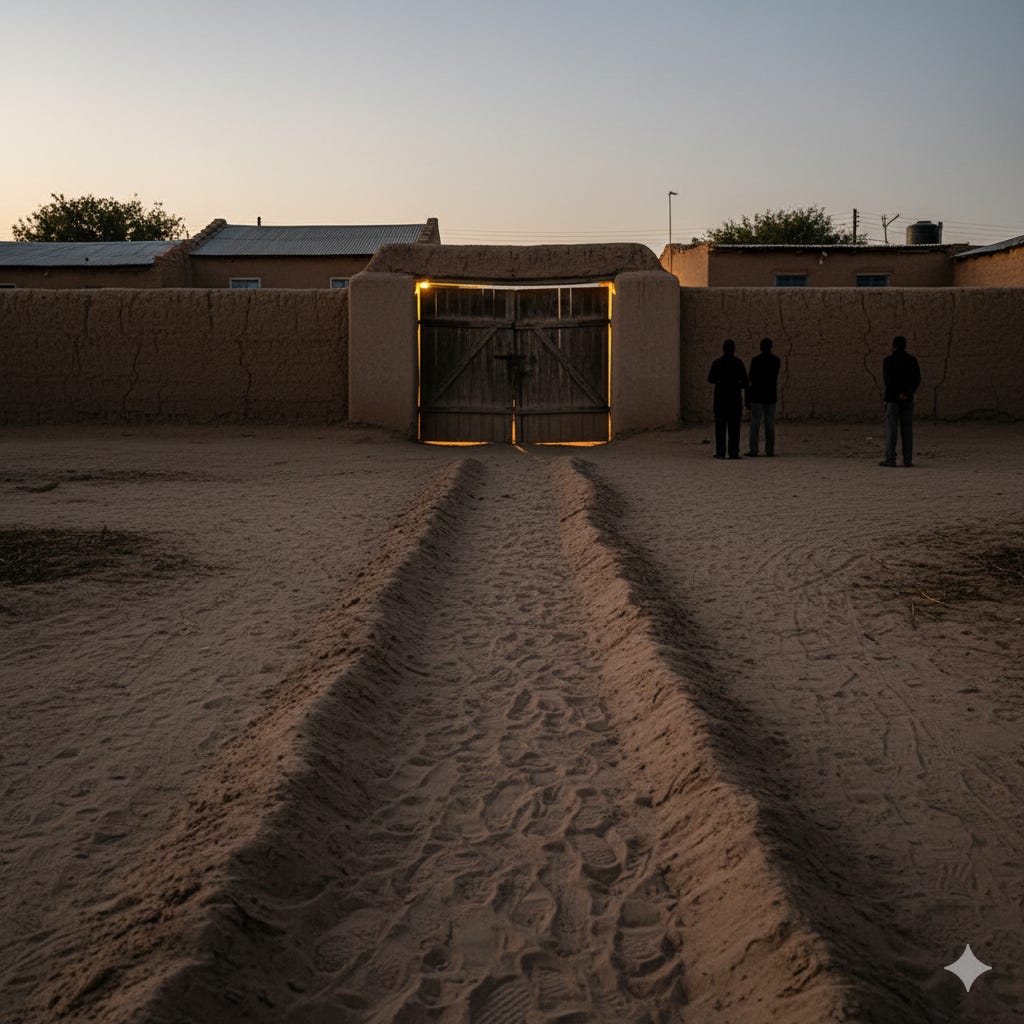
When you build an orphanage in a community, you don’t just add a service. You create a tractor beam. A powerful, constant pull toward one compound, usually in a place where families are already living one crisis away from collapse. And once that beam is switched on, it doesn’t just “help children.” It rearranges the whole neighborhood around it.
It pulls children away from families.
It pulls neighborhood rents upward.
It pulls hope toward a building and away from parents.
And it pulls responsibility away from the systems that should be strengthening families in the first place.
Orphanages don’t just receive children. They attract them.
Here’s what the tractor beam of an orphanage does: the minute the walls start going up, people in the surrounding community begin to assume what’s inside. Because they’ve seen this story before.
They assume there’s food.
School fees.
Medicine.
Electricity.
Connections.
A path toward better life for a child.
They’re not wrong. And so, parents start doing the only math available when you’re broke and exhausted, scared, and you know there are not many options: if “in there” means my child eats and goes to school, and “out here” means I’m praying the landlord gives us one more week, then of course the building starts to look like a lifeline. Not because mothers don’t love their children, but because they do.
But love can’t pay school fees.
The story that illustrates the point
I know of a story where an orphanage building (in an extremely impoverished neighborhood in a capital city) was already under construction: money spent, walls up, programs planned, before the leadership changed hands. Then a new director stepped in and did something that takes real backbone: She said, “This will not become an orphanage.”
Instead, she decided it would become a family reintegration and strengthening community center - a place designed to keep children connected to family, not separated from them. On paper, that looked like a clean pivot, and it was definitely a move in the right direction. In real life, she had actually inherited a tractor beam that was already running before she arrived on the scene. As construction was being completed, she found that she had to field daily requests from mothers in the community standing at the gate, asking to put their children “in the center.”
Not asking about a parenting group.
Not asking about counseling.
Not asking about school support.
Asking - sometimes begging - to place their children inside the walls.
That probably sounds crazy to you, but if you think about it, you can hear the unspoken logic behind the request:
“I know what’s in there. I can see the building. There has to be help in there that I cannot get out here.”
They weren’t lazy. They weren’t confused. They loved their children and wanted what was best for them. And they were responding to what the building communicates without saying a word: Support lives behind those walls.
So the director wasn’t just rebuilding programming. She was trying to rewrite a story the community had already learned: if you want resources for your child, you hand your child over to the institution. That’s not a “community misunderstanding.” That’s the orphanage model doing what it has always done.
Then the neighborhood started shifting
And here’s the second effect that almost never makes it into donor updates: as the facility went up, it changed the area’s perceived value. People in that community assumed:
staff would want housing nearby,
visitors with resources would come through,
money would flow,
infrastructure would improve,
“important people” would be around.
So the market responded. Rents went up in the surrounding housing. Landlords do what landlords do: they priced based on what they thought the area could now command. But rising rent doesn’t just affect “the neighborhood.” It impacts the very families you’re trying to help. Remember that this neighborhood was already home to people living on the edge of disaster. Rising rents pushed many of them right over the bring and into crisis.
So now you have:
more housing instability,
more displacement pressure,
more financial stress,
and yes, increased risk that more children in the community will become separated from family (because we know that poverty is often a primary factor driving the separation of children from family)..
The tractor beam doesn’t only pull children toward the building. It can push families off the ledge.
The brochure never lists the side effects
Here’s the honest ledger. When you build an orphanage, you often also:
1) Concentrate resources in one place.
So families start believing the only path to help is through separation.
2) Reshape local norms about what “care” is.
Care becomes institutional, not relational. Delivered, not supported.
3) Create competition.
Families compete for spots. Community leaders feel pressure to refer.
4) Distort local markets.
Rent rises. Prices shift. Expectations change. The community reorganizes itself around the orphanage compound.
5) Reward separation.
Even if nobody says it, the message lands: children inside get more. And once that message is in the water supply, it’s hard to filter out.
The bigger problem: the tractor beam drains government capacity, too
Now zoom out, because the pull of the tractor beam doesn’t stop at the gate. One of the most damaging long-term effects of externally funded orphanage models is this: They can undermine - and sometimes cripple - a government’s ability (and even willingness) to build its own social welfare system.
Even when a government wants to shift policy and practice toward family-based care, it’s trying to do so in a reality where external money is still aimed at institutions. And that money is rarely flexible. It’s designated. Restricted. Tied to buildings. Tied to bed counts. Tied to sponsorship rosters. Tied to institutional operating budgets. So governments end up boxed in: they’re told, “Move to family-based care,” but the most visible funding stream flowing into the country still says, “Keep the institution running.” When foreign-funded orphanages become the de facto safety net, you get a substitution effect: Why invest in a public system if NGOs and donors are covering the gaps? That’s not how you build durable, sustainable, long-term care reform. Over time, bypassing government systems erodes the very capacity needed for real change:
trained social welfare workforce,
case management and referral pathways,
data systems and oversight,
standards and enforcement,
and political will to invest in prevention.
And here’s the brutal irony: When external funding is locked into the orphanage model, it doesn’t just keep orphanages open, it actually dis-empowers local governments from pursuing better options for the vulnerable children within their borders. It can cripple a government’s ability, and even its will, to seek and embrace better solutions for kids.
Good intentions don’t turn off the tractor beam
Most orphanages are not built by villains. They’re built by people who see need and want to help. But a building creates gravity whether you meant it to or not. And gravity doesn’t care about your mission statement.
For the orphanage model to work, there must be children in the institution. Orphanages raise funds and operate by filling the beds. And if the structure is designed to absorb children, the community will supply them, not because parents don’t care or want them, but because poverty is pressure and pressure finds the weakest seam.
The bridge we’re trying to build
We don’t need more tractor beams pulling children away from family. We need resources that flow to and through families, not around them. We need support that stabilizes housing, strengthens caregivers, and makes it easier to keep children safe at home than to place them behind walls. And we need donor strategies that build government capacity instead of bypassing it, because sustainable care reform has to live inside a country’s own systems, not inside someone else’s compound.
The future of child welfare isn’t a nicer orphanage.
It’s a community where help doesn’t require the absence of parents, and where governments are resourced and empowered to build a safety net that keeps children safely at home.
That’s the bridge we’re trying to build.